

In the ongoing story of humanity’s attempts to engineer solutions for self-created problems, the PU floor occupies a peculiar but instructive chapter. We build factories that produce chemicals capable of corroding concrete, then develop flooring systems to resist those same chemicals. We design facilities where temperature fluctuations would crack rigid surfaces, then invent flexible coatings that expand and contract without failure. Polyurethane flooring, commonly known as PU floor systems, emerged from this cycle of industrial challenge and material response. What began as a solution for extreme manufacturing environments has evolved into a versatile flooring technology that now protects surfaces in settings ranging from pharmaceutical clean rooms to commercial kitchens, each application revealing something about our capacity to adapt built environments to increasingly demanding conditions.
The Material’s Nature
Polyurethane belongs to a family of polymers created through the reaction of polyols with isocyanates, a chemical process that sounds esoteric until one considers its ubiquity. The same basic chemistry produces everything from foam cushions to adhesives to the coatings we apply to floors. What distinguishes a PU floor system is its particular formulation, optimised for the specific stresses that floors endure.
The resulting material exhibits properties that seem almost contradictory:
- Flexibility that allows thermal expansion without cracking
- Toughness that withstands repeated impact and abrasion
- Chemical resistance spanning acids, alkalis, and organic solvents
- Rapid curing that minimises facility downtime during installation
- Temperature tolerance from freezing conditions to moderate heat
In Singapore’s relentlessly humid climate, where materials either adapt or fail, the PU floor has proven remarkably resilient. The flexibility that serves it well in temperature-variable environments also helps it cope with the moisture-related expansion and contraction that plagues rigid flooring systems.
Where Flexibility Matters
Consider the food processing facility, a space subject to temperature extremes that would defeat many flooring materials. Freezer rooms maintain subzero temperatures whilst adjacent areas remain at ambient heat. A PU floor accommodates these transitions, flexing rather than fracturing as it moves between thermal zones. This elasticity, measured in technical specifications yet experienced as simple durability, explains why Singapore’s food manufacturing sector has widely adopted PU floor systems.
The pharmaceutical industry presents different challenges. Here, the concern centres not on temperature but on contamination control and chemical exposure. Clean rooms demand surfaces that shed no particles, harbour no microbes, and resist the aggressive cleaning agents used to maintain sterility. A PU floor meets these requirements whilst providing the seamless, cove-detailed surfaces that eliminate corners where contaminants might accumulate.
The Industrial Reality
Manufacturing facilities have always been hard on floors. Machinery vibrates, chemicals spill, forklifts traverse the same paths thousands of times. In automotive workshops and electronics assembly plants throughout Singapore, the PU floor has become nearly standard, not through regulation but through a kind of material natural selection. Flooring systems that could not withstand industrial conditions failed and were replaced. Those that endured, like polyurethane systems, proliferated.
The chemical resistance of a PU floor deserves particular attention. Unlike epoxy systems, which excel in many applications but can be vulnerable to certain chemicals, polyurethane demonstrates broader tolerance. Oils, fuels, acids, caustics, even some solvents that would attack other flooring materials leave PU floor systems largely unaffected. This resilience matters especially in facilities where diverse chemicals are handled, making it impractical to specify flooring for each specific substance.
Installation Considerations
Installing a PU floor follows protocols developed through decades of trial and error. Surface preparation determines ultimate success, a truth that holds regardless of the coating system employed. Concrete substrates require profiling to ensure adequate mechanical bonding. Moisture testing confirms the slab’s readiness to receive the coating. Any deviation from preparation standards virtually guarantees premature failure.
The application itself proceeds in layers, each building upon the last:
- Primer coat that penetrates and seals the substrate
- Build coats that provide thickness and body
- Top coat that delivers final appearance and additional chemical resistance
- Optional anti-slip aggregates for areas where traction matters
In Singapore’s tropical environment, applicators must account for humidity effects on curing. Polyurethane systems generally tolerate moisture better than epoxies during application, yet optimal conditions still improve final results.
The Maintenance Question
A well-installed PU floor requires surprisingly little maintenance. Regular cleaning with appropriate detergents maintains appearance and hygiene. Unlike porous surfaces that absorb spills and stains, the seamless polyurethane surface resists penetration. This ease of maintenance translates to lower lifecycle costs, though the initial investment typically exceeds conventional flooring options.
The longevity of PU floor systems in demanding environments often exceeds 15 years. In less severe applications, the flooring can last considerably longer. This durability represents a kind of material efficiency, reducing the frequency with which floors must be removed and replaced, along with the associated waste and disruption.
Adaptations and Variations
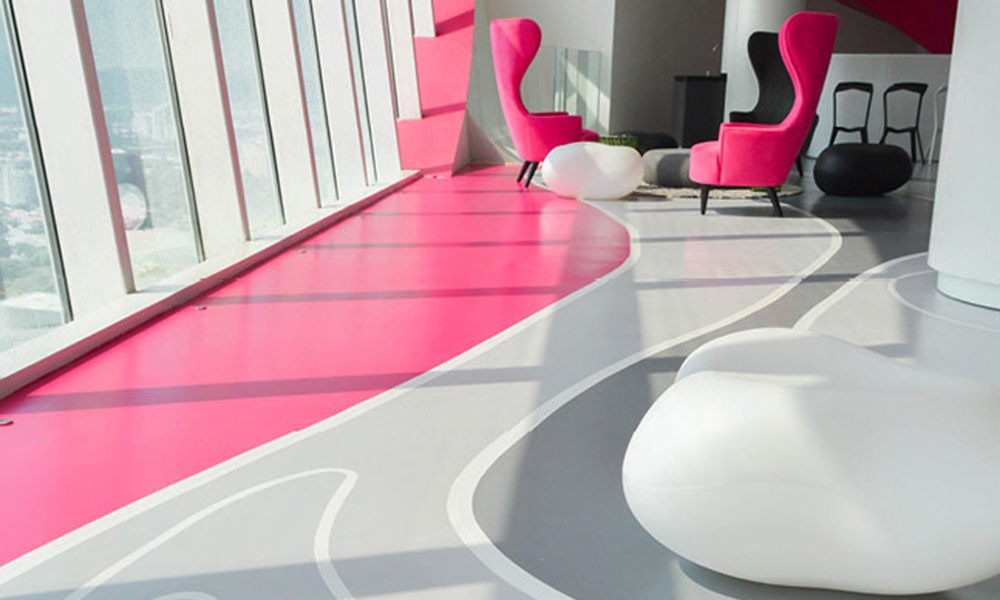
The basic polyurethane chemistry permits considerable variation. Self-levelling PU floor systems flow to create perfectly flat surfaces. Trowel-applied versions build greater thickness for heavy-duty applications. Decorative options incorporate colour and texture, transforming functional surfaces into design elements. Each variation represents an adaptation to specific environmental pressures or aesthetic requirements.
Conclusion
The trajectory of flooring technology maps neatly onto broader patterns of industrial development. As our manufacturing processes grew more demanding, our materials evolved to meet those demands. The PU floor emerged not from abstract innovation but from concrete need, a material solution to material problems. In Singapore and across diverse climates and industries, these flooring systems continue proving their worth through years of reliable service. What we have created, through somewhat circuitous means, is a surface that bends without breaking, resists without brittleness, and endures without constant intervention. Whether this represents progress or merely adaptation to self-imposed challenges remains an open question, yet the practicality of the PU floor itself remains beyond dispute.